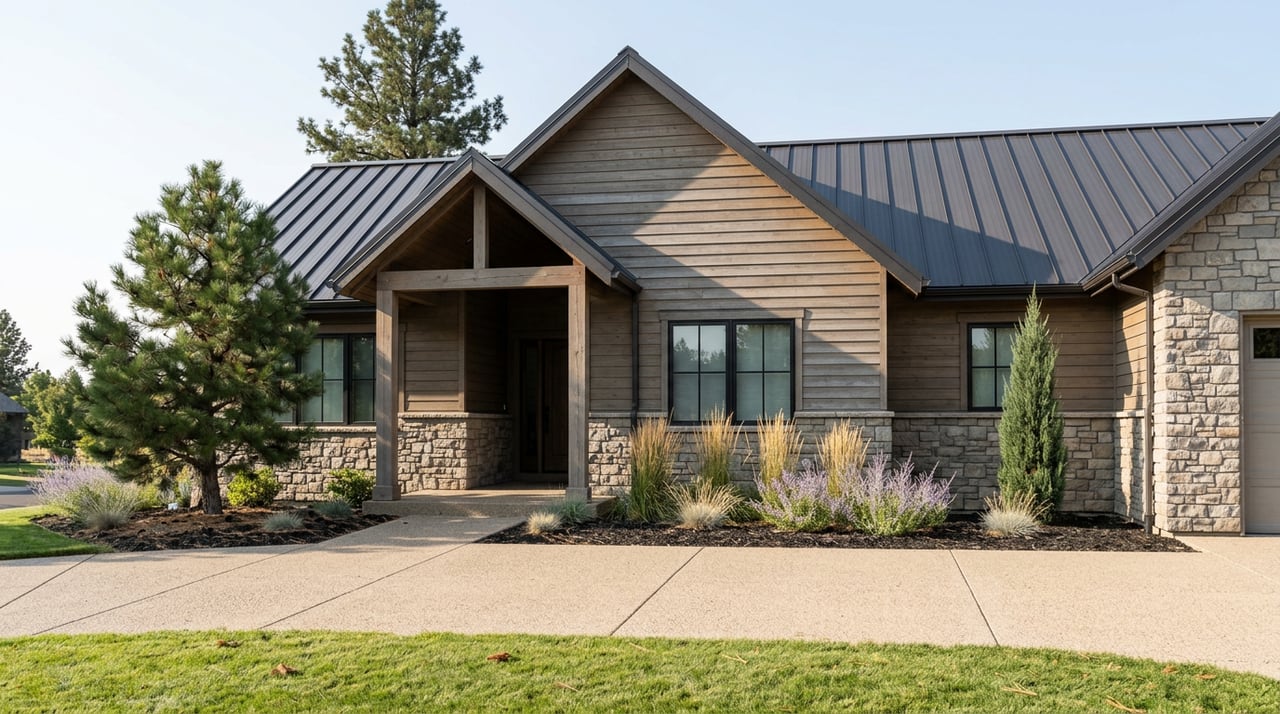
In Broomfield, Your Tax Bill Depends on Which Village You Buy Into
September 10, 2026
September 10, 2026
A buyer closes on a new build in one of Broomfield's master-planned communities. The first property tax bill arrives a few months later and it looks almost gentle, a few hundred dollars less than the buyer's lender had estimated. Then the second bill arrives, sometimes a third, and the number climbs by hundreds or thousands of dollars without the home changing at all. Nobody misquoted anything. This is just how Colorado assesses new construction, and it happens more often in Broomfield's newer subdivisions than almost anywhere else on the Front Range, because so much of the city's recent growth sits inside a metro district.
The sticker price on a Broomfield listing tells you almost nothing about what you will actually pay every year to own it. Two homes priced within a few thousand dollars of each other, in neighborhoods that look equally polished on a tour, can carry tax bills that differ by well over a thousand dollars annually. The difference has nothing to do with school quality, lot size, or how recently the kitchen was updated. It comes down to an accident of financing: whether the subdivision was built with a metro district attached, and which specific filing within that district your address happens to sit in.
Every property in Broomfield pays the city and county's own mill levy, which has sat at 28.9 mills for a quarter century according to public reporting on the city's finances. For most residents, that portion accounts for roughly 27 percent of the total bill. The rest comes from whichever school district, fire district, and drainage authority serve that address, and for a growing share of Broomfield homeowners, a metro district on top of all of it.
Broomfield's own FAQ page walks through the formula: actual value, multiplied by a state-set assessment rate, multiplied by the local mill levy, equals the tax owed. The mill levy is the piece that varies house to house, sometimes block to block, because it stacks every taxing authority that overlaps a given parcel. Two homes a few blocks apart, zoned to the same school district, can carry combined mill levies that differ by 60 mills or more depending on which metro district, if any, sits underneath them.
Much of Broomfield's newer growth has been built through metro districts, special taxing entities that let a developer finance streets, parks, water lines, and covenant enforcement up front and recover the cost from homeowners over decades through an added mill levy, rather than building those costs into the sale price or waiting on the city's own capital budget. Ward 5 alone, which covers a large share of the city's newer development, counts 24 metro districts on the books, 21 of them currently active with five more expected, according to public reporting on the city's finances.
The named districts make the spread concrete. Here is how several of Broomfield's newer communities compare on total combined mill levy:
| Community (metro district) | Approx. total mill levy |
|---|---|
| Highlands Metro District No. 1, 2, or 3 | 101.8 |
| Broadlands Metro District No. 2 | 115.4 |
| Baseline Metro District No. 1 | 107.2 |
| Baseline Metro District No. 4 | 122.8 |
| Lambertson Farms Metro District No. 1 | 107.2 |
| McKay Landing Metro District No. 2 | 135.9 |
| Lambertson Farms Metro District No. 2 | 146.1 |
| Baseline Metro District No. 2 | 154.0 |
| Baseline Metro District No. 3 | 163.4 |
Confirm the current-year figure for your specific address with the Broomfield Assessor before writing an offer, since rates are finalized in December and can shift year to year.
The nuance worth sitting with is the range inside that table. Highlands, itself a metro district community, sits near the low end at 101.8 mills. Baseline's third filing area sits more than 60 mills higher, near 163.4, a gap of roughly 60 percent between two communities that both carry the same kind of financing structure. A metro district is not automatically a red flag, and it is not automatically expensive. The only number that matters is the one attached to the specific filing, not the subdivision's name or how new the sign out front looks.
Colorado assesses property in arrears. Broomfield's own guidance on valuations explains that a notice arriving in a given year reflects data gathered from an earlier window, not the current condition of the property. For an established home, that lag is mostly invisible. For a brand new build in a metro district, it can be dramatic: a parcel that closed as an unfinished lot may still be valued as vacant land on its first tax notice, because the assessor has not yet caught up to the completed structure. The real bill, once the county recognizes the finished home, often lands a cycle or two later, well above what the buyer budgeted from that first, misleadingly low number.
This is compounding on top of a statewide shift that is already moving Broomfield bills this year regardless of address. Colorado's residential assessment rate now splits by taxing authority: the school portion sits at 7.05 percent of a home's actual value for the current cycle, while the rate applied to city, county, and special district levies runs lower, around 6.25 percent, following legislative changes that took effect in 2026. Assessors around the state have been fielding confused calls as a result. Elbert County's assessor told Colorado Public Radio in February that owners keep "wondering why perhaps their value may have gone down, but their taxes have gone up." The formula is genuinely more complicated than it used to be, and it moves independently of whatever your home is actually worth.
None of this is theoretical elsewhere in the metro. In Aurora, homeowners in the Blackstone metro district saw their district's contribution to a regional infrastructure authority jump 571 percent between 2023 and 2024, adding roughly $380 to each home's tax bill, according to CBS Colorado's reporting from July 2024. The district manager confirmed other Aurora metro districts should expect similar increases in the years following. A metro district's own obligations, particularly outstanding bond debt, do not stay flat just because a buyer's mortgage payment does.
Does every new subdivision in Broomfield have a metro district? Most of the city's recent master-planned growth does, but not all of it, and the districts are not interchangeable. Highlands and Baseline are both metro district communities with combined mill levies that differ by more than 60 mills.
Will a metro district's mill levy ever come down? It can, once the district's bonds are retired, but that timeline is set by the district's own service plan and is not something a buyer should assume will happen on any particular schedule.
Where do I find the actual number before I make an offer? The Broomfield Assessor's office publishes mill levies by tax area and district each January, and any title company working the transaction can pull the specific figure for an address before you go under contract.
The price on the listing is a starting point, not the whole picture, and in Broomfield the address decides a real share of what happens after closing. If you are comparing a newer village against one of the city's established neighborhoods and want the actual numbers run for a specific property, Terri Gray can walk through it with you, including how it affects a VA loan's monthly qualification, before you write anything down.
Stay up to date on the latest real estate trends.





Let me know how I may be of assistance to you.