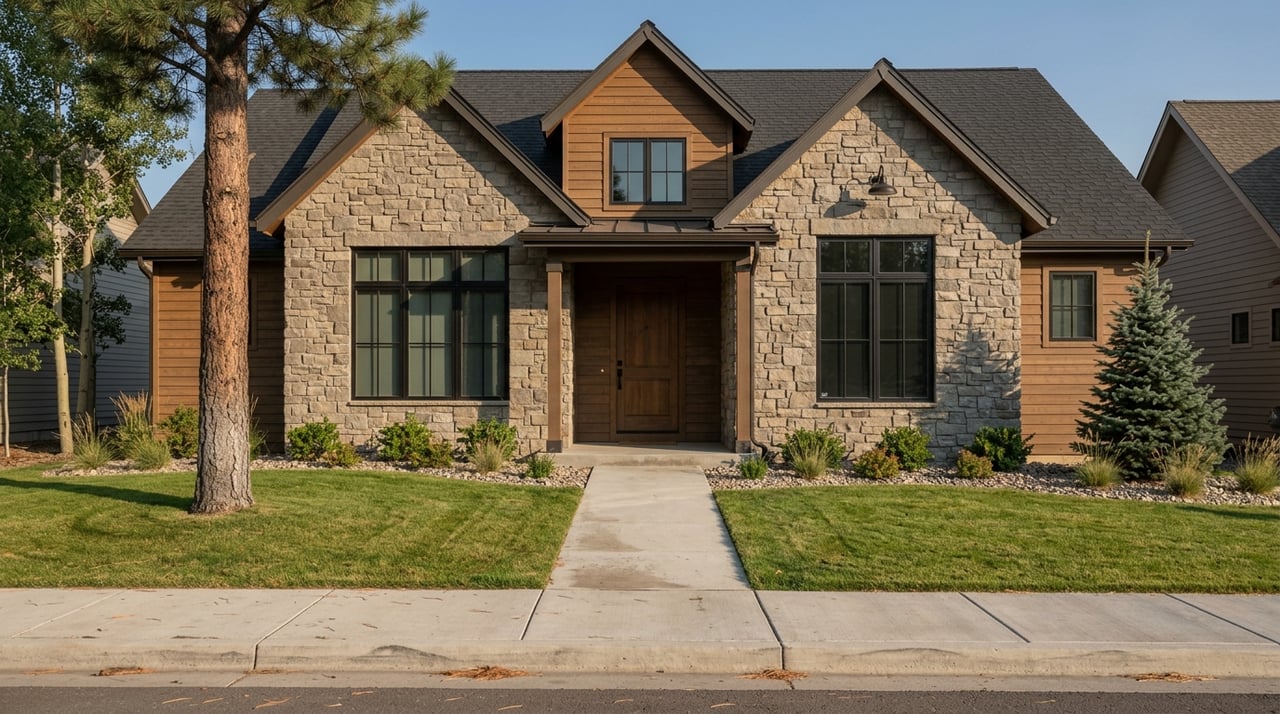
Relocating to Boulder Neighborhoods: How to Choose Well
June 18, 2026
June 18, 2026
Wondering how to choose your first Boulder neighborhood when every pocket of the city seems to offer something different? If you are relocating, it is easy to get pulled in by mountain views, trail photos, or a favorite coffee spot and still miss the factors that will shape your day-to-day life. The good news is that Boulder becomes much easier to narrow down when you focus on commute, outdoor routine, housing type, and monthly carrying cost first. Let’s dive in.
Boulder is not one uniform market, and that is one of its biggest strengths. The city is organized into subcommunities shaped by roads, waterways, and topography, so your first neighborhood decision is really about how you want your daily routine to work.
For many relocators, the best first filters are simple. Think about how often you commute, how much trail or bike access matters, what type of home you want, and what monthly costs feel comfortable. In Boulder, those factors often tell you more than a neighborhood name alone.
The city’s outdoor and transportation network plays a big role in that decision. Boulder has more than 46,640 acres of Open Space and Mountain Parks, about 155 miles of trails, and more than 300 miles of bikeway, including bike lanes, multi-use paths, underpasses, and designated routes. That means your location can meaningfully change how often you walk, bike, ride transit, or head out for recreation.
Boulder’s planning documents make it clear that each area has its own role and character. North Boulder is described in city planning as beautiful, diverse, inclusive, and adaptive, while East Boulder is envisioned as a local business hub with a variety of housing options and stronger regional connections.
That matters because neighborhoods only a few miles apart can live very differently. One area may feel urban and walkable, while another is more residential and car-light, and another may be a better fit for transit or quick regional access. If you are moving from out of town, that contrast is important to experience in person before you make a decision.
If you want to be in the middle of the action, Downtown Boulder is the city’s most walkable core. The city describes downtown as a district for shopping, lodging, restaurants, services, entertainment, and events, with Pearl Street Mall serving as a four-block outdoor pedestrian destination.
Transit access is a major advantage here. Downtown Boulder Station serves 16 bus routes, and the HOP connects CU Boulder, University Hill, downtown, and the 29th Street Mall with 15-minute peak frequency. If you want to rely less on your car, this part of Boulder deserves a close look.
University Hill sits next to downtown but has a more energetic, student-adjacent feel. The city describes it as a dynamic neighborhood with an eclectic mix of restaurants, shops, and entertainment venues, and housing in the central area tends to include apartments, condos, lofts, and older single-family homes.
Price is part of the equation. Recent market snapshots place downtown around $1.2 million and University Hill around $1.1 million, with some pockets of University Hill moving more slowly than other parts of Boulder. If your top priorities are walkability, transit, and being near activity, these neighborhoods may be worth the tradeoff.
North Boulder often appeals to buyers who want a more residential setting without feeling far from downtown amenities. The area is commonly associated with a mix of single-family homes, townhomes, and condominium complexes, along with quieter streets and access to parks.
This can be a strong fit if you want balance. You may not be in the busiest commercial core, but you can still stay connected to central Boulder while enjoying a more neighborhood-oriented day-to-day feel.
Old North Boulder stands out for buyers who want a bike-first lifestyle. Market snapshots place Old North Boulder at a Redfin Bike Score of 93, which helps explain why it draws attention from buyers who value easy cycling access but do not need to live downtown.
Current price snapshots place North Boulder around $936,000 and Old North Boulder around $1.26 million. That spread is a good reminder that even within one broad area, costs and housing options can vary meaningfully.
If immediate access to trails is high on your list, South Boulder often moves to the top of the conversation. This part of the city is frequently a fit for buyers who want a more residential feel paired with strong outdoor access.
Table Mesa includes mostly midsize homes with both attached and single-family options, while Martin Acres offers a wide array of single-family homes in a more suburban setting. Housing age also differs by area, which can help you anticipate style, renovation level, and maintenance expectations.
Trail access is a real differentiator here, but it is important to test the reality, not just the map. Chautauqua is a very high-use trailhead where parking can be a challenge, while Flatirons Vista has a paid parking lot and a medium-use profile. If hiking is part of your weekly routine, checking those access points at your likely time of day is smart.
Recent medians range from roughly $849,000 in Martin Acres to about $939,000 in South Boulder, with Table Mesa pockets around $1.25 million to $1.4 million. If you want daily access to the outdoors and are comfortable with a more residential setting, this area may be one of your best matches.
East Boulder can be especially useful for relocators who want stronger regional connections or a wider mix of housing options. The city’s plan for East Boulder envisions a local business hub with a variety of housing choices and stronger connections to the surrounding city and region.
Boulder Junction is a standout if transit matters. It is a transit-oriented development with an RTD station, and residents and employees can receive EcoPass, BCycle, and Colorado CarShare benefits. The reopened Boulder Junction station also serves routes to Denver International Airport and Denver Civic Center, which can be a real advantage if you travel often.
Gunbarrel offers a more suburban setting. Neighborhood snapshots describe it as a residential community made up largely of single-family homes near Boulder Reservoir, with greenspace, a walking or jogging trail, and nearby shopping. Route 205 links Gunbarrel with Boulder Junction and Downtown Boulder Station, which helps connect it back to the rest of the city.
Price can make this area attractive for many first-time Boulder buyers. Current market snapshots place Gunbarrel in the high-$700,000s to low-$800,000s, which is lower than many central Boulder neighborhoods.
In Boulder, the list price is only part of the story. Monthly carrying cost can vary sharply by pocket, so the HOA line deserves as much attention as the asking price.
Neighborhood snapshots show HOA ranges of roughly $108 to $121 per month in Gunbarrel, roughly $240 to $1,296 per month downtown, and about $600 to $700 per month in Table Mesa. Those differences can meaningfully affect your monthly budget, especially if you are comparing condos, townhomes, and single-family homes.
Home age matters too. Snapshot data shows downtown homes ranging from 1915 to 2016, North Boulder from 1957 to 2021, Table Mesa from 1961 to 2022, Martin Acres from 1955 to 1962, and Gunbarrel from 1989 to 1997. That gives you a practical clue about likely maintenance, updates, and architectural style.
One of the most helpful tools for relocators is the City of Boulder Property Information map. It includes layers for zoning, annexation, rental housing license, parcel and address information, comprehensive plan land use, historic preservation, wetlands, flood, wildland fire interface, and special district information.
That matters because Boulder’s zoning rules separately govern use, density, and development. Instead of treating zoning and map layers as something to review later, it is smarter to use them during your neighborhood search from the start.
Boulder’s geography also deserves close attention. The city states that it has the highest flash-flood risk in Colorado because of its geographic location and features, so buyers considering creek-adjacent or foothills-adjacent homes should review flood and wildland fire layers before narrowing a shortlist.
A successful Boulder scouting trip should test your real routine, not just the postcard version of the city. If commuting will be part of your week, drive or ride the route you expect to use at the time you would actually travel.
A few transit nodes are especially worth testing. Downtown Boulder Station serves 16 routes but does not have RTD parking, US36 and Table Mesa offers a park-n-ride with 824 spaces and nine bus routes, Boulder Junction is designed as a transit hub, and Route 205 connects Gunbarrel to Boulder Junction and downtown.
You should also test your errand and recreation loop. Pearl Street Mall offers a pedestrian-focused downtown experience, Boulder Creek Path runs 5.5 miles through downtown and outward toward 55th Street and Boulder Canyon, and the city’s trail and bikeway system can make one neighborhood much more convenient than another.
If trails are a major reason you are moving to Boulder, check access at the same time of day you would usually go. A trailhead that looks perfect on a map may feel very different when parking, traffic, or crowd levels show up in real life.
If you are feeling torn between several parts of Boulder, keep your decision process simple. Start with the neighborhood that best matches your commute, outdoor routine, and monthly carrying cost.
That approach tends to work because it reflects how Boulder actually functions. In this market, practical fit often matters more than a neighborhood’s general reputation.
If you are relocating and want help comparing Boulder neighborhoods block by block, housing type by housing type, and cost by cost, Terri Gray can help you build a smarter shortlist and a smoother move.
Stay up to date on the latest real estate trends.
Let me know how I may be of assistance to you.